Choosing ruby: separate red colour from treatment questions
Ruby: compare individual stones, understand disclosures and choose a realistic wearing plan.
In this article
Which red do you want to wear?
Are you looking for a small, bright accent, a deep-red centre stone or a rounded stone? Describe that preference before comparing rubies. Keep the appearance you enjoy separate from the origin and treatment claims that need evidence. A colour name alone leaves those questions unanswered.
What makes it ruby
Ruby is the red variety of corundum, the mineral family that also includes sapphire. Chromium produces its colour and can cause red fluorescence, a glow that adds to its appearance. Iron can reduce that fluorescence. The label ruby identifies the material; it does not tell you how attractive, rare or suitable a particular example is. GIA: Ruby description
Compare brightness, not just redness
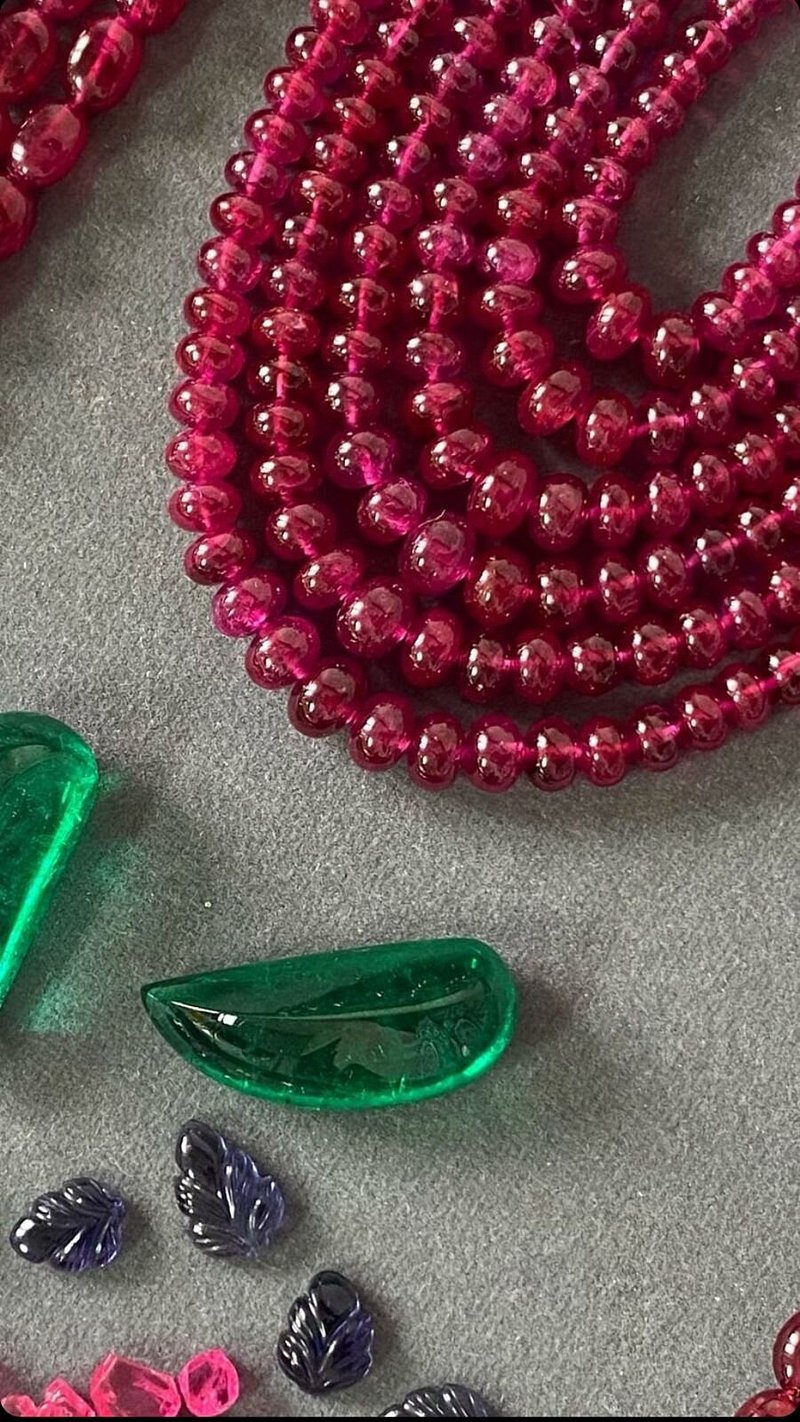
Colour has a large effect on ruby value. Highly prized examples have vivid red to slightly purplish red colour without becoming too dark. Inclusions, features inside a stone, are expected and are not automatically a reason to reject it. Consider whether it interrupts brightness or transparency, or whether a surface-reaching fracture presents a durability concern. GIA: Ruby quality-factors
For your comparison, write down three things you can actually describe: the colour you prefer, whether you like its appearance from normal viewing distance, and whether its outline suits the design you have in mind. Keep those observations separate from the seller’s quality label. Our gemstone quality questions offer a framework for that conversation. GIA: Ruby quality-factors

Ask what changed after mining
Heat treatment is common in ruby. Diffusion treatment and lead-glass fracture filling also occur, with different implications for value and care. Request written treatment information. A laboratory identification report can describe natural or laboratory-grown identity and detectable treatments; GIA does not award ruby a universal quality grade. Origin by itself is not a quality guarantee. GIA: Ruby buyer-guide
Before comparing two prices, ask whether you are comparing the same kind of material and treatment. An attractive appearance is a valid preference, but it should be an informed one. If a report is supplied, use our report-reading guide to prepare questions about what the document does and does not establish. GIA: Ruby buyer-guide
Choose care around the actual stone
Untreated and heat-treated ruby rate 9 for scratch resistance on the Mohs scale. Excellent resistance to breakage and no cleavage, or splitting planes, support everyday ring use. Filled or dyed material requires greater caution: even mild acids can cause damage. GIA recommends a damp cloth for fracture-filled, cavity-filled or dyed stones. Confirm treatment and condition before using steam or ultrasonic cleaning; do not apply untreated-ruby care to every ruby. GIA: Ruby care-cleaning
Before purchase, ask who can inspect the setting, which care instructions will accompany the piece and what to do if its appearance changes. Keep a written cleaning plan with the purchase record. GIA: Ruby care-cleaning
A clear next step
Choose a small shortlist, then request consistent information for each candidate: identity, treatment, dimensions, condition and any report. Make the final choice on the combination you understand and enjoy. For another red option, explore spinel and compare individual stones rather than assuming one gem name always delivers the better result. GIA: Ruby description