Choosing peridot: compare green colour and real-world wear
Compare green colour and cut while treating seller grades and unheated labels cautiously.
In this article
Which green do you want to see?
Begin your peridot shortlist with three preferences: the green you enjoy, the outline you want and the piece you hope to wear. Keep that note beside each quotation. It helps you explain why one candidate appeals to you and ask what another would offer for the price.
Where the colour comes from
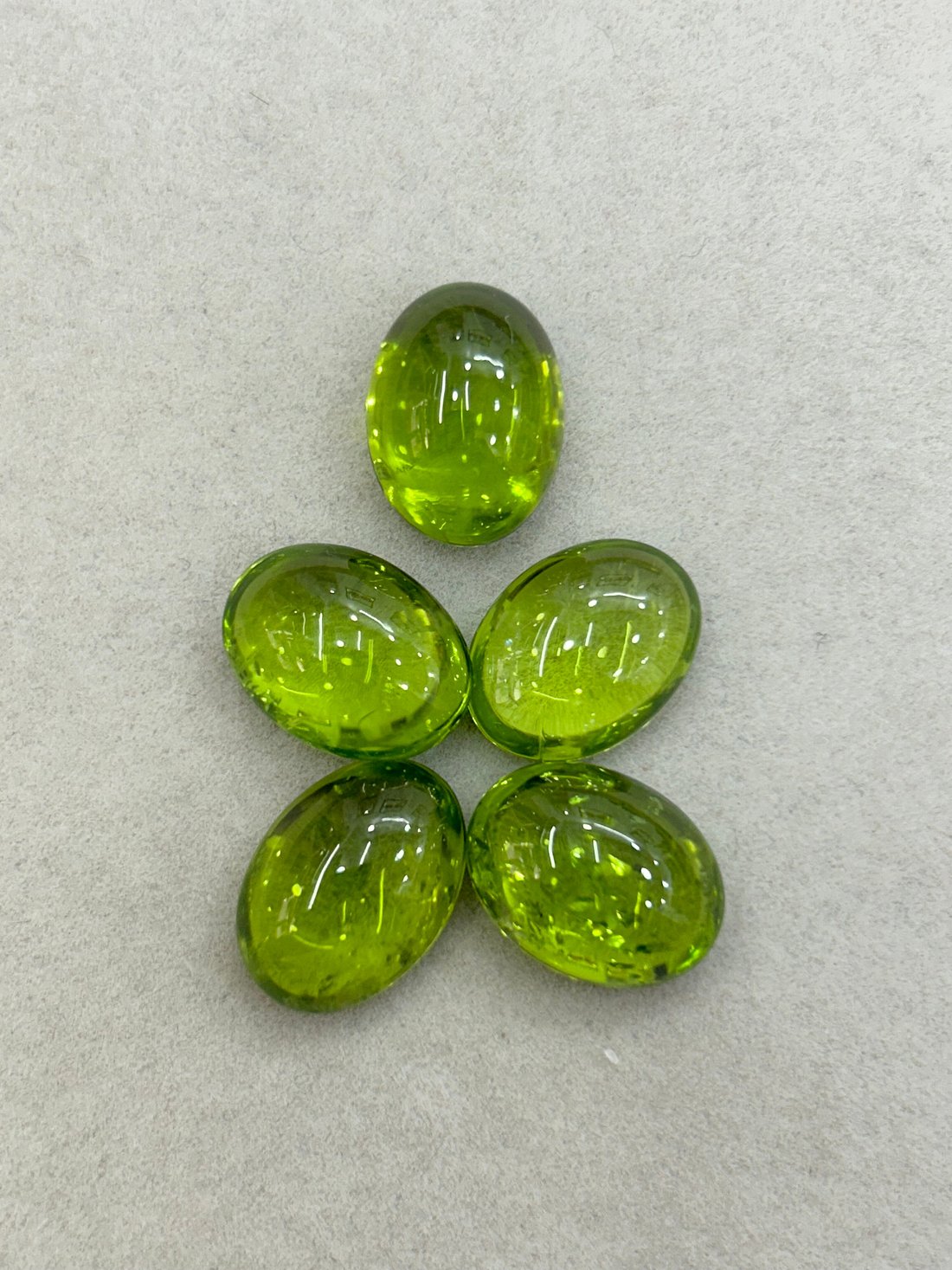
Peridot is gem-quality olivine, containing magnesium and iron. Iron is responsible for its green colours. Yellowish green is common, while the range also includes brownish and purer green material. It occurs in volcanic rocks and, rarely, meteorites. The identity is independent of a seller’s chosen colour description. GIA: peridot description
Compare the stones, then read the labels
Ask for the same viewing sequence for each candidate. Describe which areas you find attractive and which you would like to inspect more clearly. If you are buying online, confirm that you are comparing the actual stones offered. Our colour and lighting guide helps make the request consistent. Keep your observations beside each seller’s description.

Look for a useful colour-and-clarity balance
Rich green without brown is especially prized, and fine colour is often found in larger gems. Better material commonly has few visible inclusions, features inside the gem. Tiny dark mineral crystals and disk-like features called lily pads can occur. Prominent inclusions can reduce value. Peridot is fashioned in many shapes and cutting styles. GIA: peridot quality factor
Use measurements to test the proposal
For a hypothetical ring, sketch the candidate’s stated outline at its actual dimensions. Compare that sketch with your preferred design, then ask the jeweller to explain the proposed profile. Our carat and millimetre guide supports this conversation. You are gathering a clearer proposal, not predicting the finished result from weight alone. Ask at which point you can review the design before it is made.
Question premium-sounding descriptions
Peridot has no standard “AAA”, “AA” or “A” quality scale. GIA also says heat is not known to improve its appearance, so “unheated” alone does not establish an added premium. Peridot is rarely treated. Ask the seller to explain the particular qualities behind a label and the treatment information available. GIA: buyers guide
Create your own comparison record
Write four brief lines for each candidate: what you like, what has been stated, what evidence you have and what remains unanswered. The quality buying questions offer a structure. If an unexplained label is doing most of the work in the quotation, request a description you can compare. Keep your budget as a separate decision rather than asking a colour adjective to decide it for you.
Agree on real-world handling
Peridot rates 6.5–7 for scratch resistance on the Mohs scale and has fair to good resistance to breakage. Knocks can fracture it, and rapid or uneven heating is a risk. It is stable in light, but acids and prolonged acidic perspiration can attack it. Clean with warm, soapy water; avoid ultrasonic and steam cleaners. GIA: peridot care cleaning
Finish with a wearing brief
Tell the jeweller which activities and occasions belong in your plans, and ask them to explain the proposed setting. Use our durability guide to keep the discussion organised. Keep the final description and care instructions together. Before agreeing, return to the green you preferred and check that your chosen stone still answers that brief after the labels have been set aside.