Choosing sunstone: compare body colour with its sparkling effect
Sunstone: compare individual stones, understand disclosures and choose a realistic wearing plan.
In this article
Do you want glitter, colour or both?
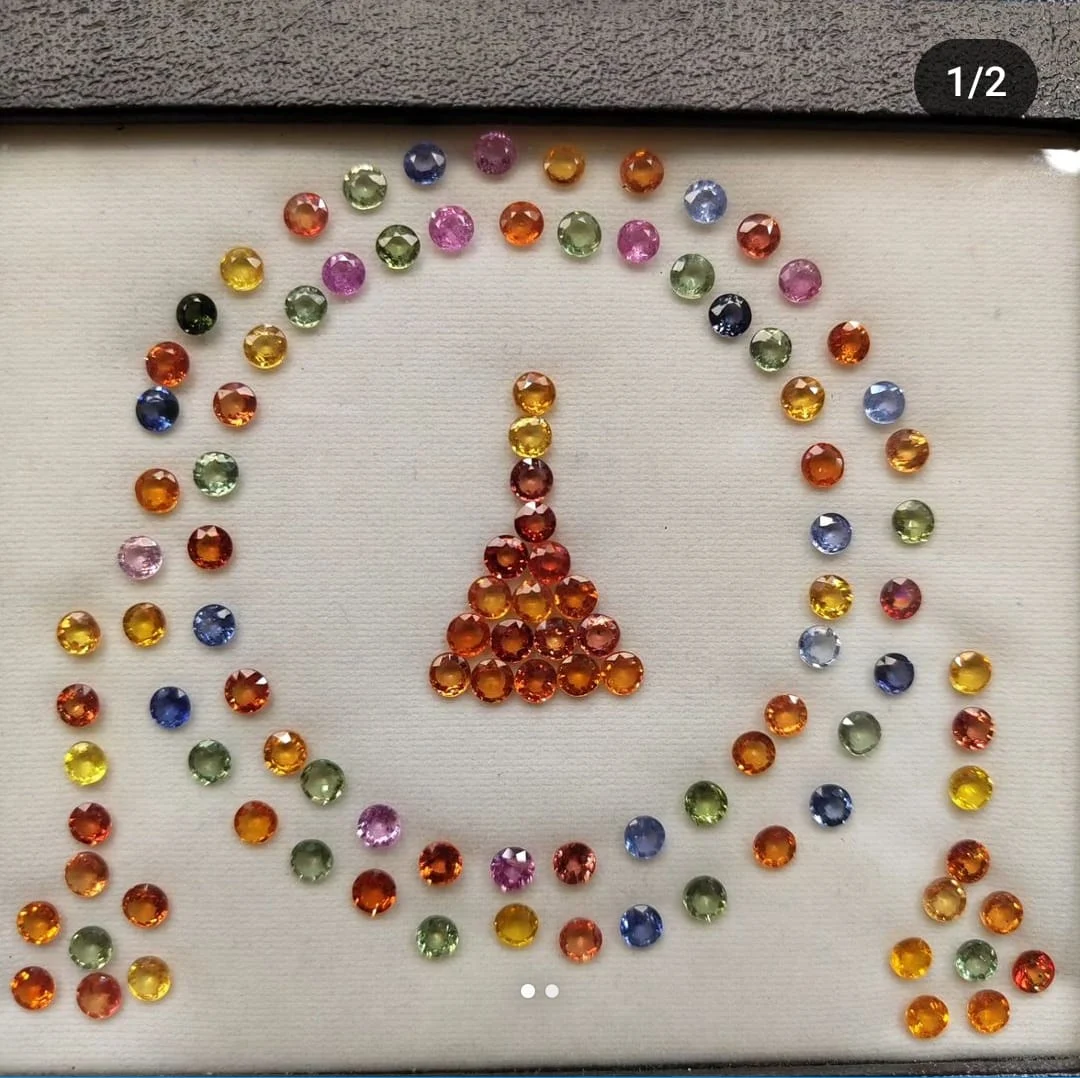
Before comparing sunstones, describe what attracts you: a subtle sheen, obvious glitter, strong body colour or several colours together. Ask for examples that answer that brief. For a commission, agree on the appearance you want before choosing the outline or approving a setting.
Why sunstones can look quite different
The name sunstone applies to feldspar gems with different compositions and appearances. Flat reflective inclusions, features inside the gem, can create aventurescence, the sparkling effect associated with some examples. Not every sunstone displays that effect. Inclusions may be copper, hematite or other minerals; their size helps determine whether you see a sheen or separate glittering reflections. GIA: Sunstone description

Look at inclusions as part of the design
Deep red, green and striking bicolour sunstones can be highly prized. In Oregon material, copper inclusions contribute to the appearance instead of functioning only as clarity flaws. Cutting can draw attention to colour or optical effects. A stone marketed as spinel red is still sunstone; the phrase describes a colour resemblance rather than a change of identity. GIA: Sunstone quality-factors
Try making a small visual brief with examples of the effect you like, then ask a seller to explain how a candidate relates to it. If you are commissioning jewellery, discuss the desired appearance before committing to a shape. Our cut and visual performance guide offers questions that go beyond choosing an outline. GIA: Sunstone quality-factors
Confirm the material and any enhancement
GIA describes Oregon sunstone as untreated, but feldspar from other sources may be colour-enhanced. That statement should not become a blanket claim about every stone sold as sunstone. Goldstone is a glass imitation containing copper crystals. Ask for written identity and treatment information, and consider independent identification when the distinction is important to your purchase. GIA: Sunstone buyer-guide
Treat an origin description as a separate claim that needs support. Ask what information the seller has and what remains uncertain. Our origin and sourcing guide helps organise that discussion. Neither a place name nor a pleasing appearance is a substitute for a clear description of the material you are buying. GIA: Sunstone buyer-guide
Put protection ahead of a hardness shortcut
Sunstone has cleavage, planes along which it can split, and poor resistance to breakage despite reasonable scratch resistance. GIA’s care guide recommends protective use, including pendants or earrings rather than more exposed rings. Avoid impacts, heat, ultrasonic and steam cleaning, and bleach-containing cleaners. Warm water and soap are a gentle option. Scratch resistance should therefore be considered alongside the risk of splitting. GIA: Sunstone care-cleaning
For a ring, ask how the design protects the stone and when you should remove it. Discuss those limits before approving the design. Our hardness and toughness guide helps you prepare the questions. GIA: Sunstone care-cleaning
A useful final checklist
Record the effect you chose, the stated identity, any treatment disclosure and the care instructions for the completed item. That is more useful than keeping only a colour nickname. If you enjoy feldspar’s changing light effects, explore moonstone too, then choose the particular appearance and wearing plan that fit your priorities. GIA: Sunstone description